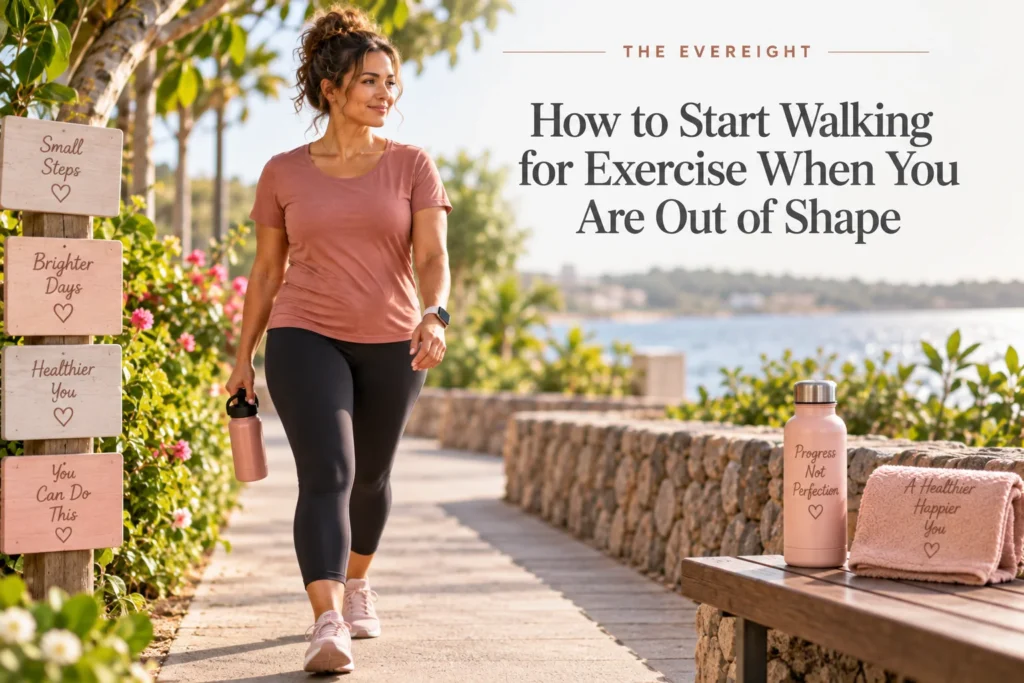
If you feel out of shape, the hardest part of walking for exercise may not be the walking itself.
It can be worrying that you are too slow, becoming breathless quickly, feeling self-conscious, or assuming a “real workout” has to last 30 minutes. None of those ideas needs to determine your starting point.
Fitness improves from an appropriate challenge repeated over time. Your first goal is not to prove what you can tolerate. It is to find a dose you can recover from and repeat.
Quick Answer
Begin with short, comfortable walks – even five minutes if that matches your current ability. Walk at a pace where you remain in control, rest when needed, and add time gradually. Use flat, predictable routes at first, wear comfortable footwear, and pay attention to pain, dizziness, chest symptoms or unusual breathlessness. Medical conditions may require individualized advice before progression.
“Out of Shape” Is Not a Medical Diagnosis
The phrase can mean many things:
- You have been sedentary.
- Stairs feel difficult.
- You fatigue quickly.
- You have gained weight.
- You are returning after illness.
- You have not exercised in years.
- You feel embarrassed exercising in public.
Your starting plan should reflect your actual function and health, not the label.
Consider Medical Guidance When Appropriate
Many people can begin light walking safely.
However, talk with an appropriate healthcare professional before substantially increasing activity if you have known cardiovascular, respiratory, metabolic, neurological or significant musculoskeletal disease; are recovering from major illness or surgery; are pregnant with concerns; or have symptoms such as unexplained chest pain, fainting or severe breathlessness.
Medication can also affect exercise response.
Start With a Baseline Walk
Choose a safe, flat location.
Walk at an easy pace.
Stop before you are exhausted.
Record only:
- Minutes walked.
- How difficult it felt.
- Any pain or symptoms.
- How you felt later that day and the next morning.
The baseline is information, not a fitness test.
If Five Minutes Is Enough, Start There
A five-minute walk is a valid exercise session.
Repeat it on several days.
When it feels comfortable and recovery is good, add a minute or two.
Short sessions can also be split across the day.
The body responds to repeated activity, not to whether the session looks impressive.
Use the “Could Do More” Rule
At the end of a beginner walk, aim to feel that you could have done a little more.
This reduces the chance of turning one session into several days of soreness or avoidance.
Progress comes from accumulated sessions.
Choose Flat Terrain First
Hills raise effort quickly.
Uneven trails require more balance and ankle control.
Start with:
- Flat sidewalks.
- Indoor corridors.
- Treadmill.
- Indoor track.
- Shopping center.
- Smooth park path.
Add terrain later.
Walk Slowly Enough
You do not need a brisk pace immediately.
If conversation is difficult, slow down.
If your walking form changes because you are trying to maintain speed, slow down.
Fitness improves at your pace.
What Breathlessness Is Normal?
Breathing faster during exercise is expected.
You should generally remain in control during beginner walking.
Severe, sudden or unusual shortness of breath, especially with chest discomfort, fainting, blue/gray discoloration or other concerning symptoms, requires urgent medical attention.
If ordinary walking consistently produces disproportionate breathlessness, seek medical evaluation.
What About Muscle Soreness?
Mild muscle soreness can occur when you increase activity.
Sharp pain, significant swelling, limping, or worsening joint pain is different.
Reduce load and seek assessment when pain is persistent or concerning.
Do not use pain as proof that the walk was effective.
Foot and Shin Discomfort
Rapid increases in walking can irritate feet, ankles or shins.
Helpful adjustments may include:
- Shorter sessions.
- Rest days.
- More gradual progression.
- Appropriate footwear.
- A more forgiving surface.
- Reviewing walking mechanics with a qualified professional if symptoms persist.
Do not simply walk through escalating pain.
A Six-Week Gentle Example
Week 1
5-10 minutes, three days.
Week 2
Repeat or add a few minutes if comfortable.
Week 3
10-15 minutes, three or four days.
Week 4
15-20 minutes on selected days.
Week 5
Maintain or add one slightly longer session.
Week 6
Build toward a routine that feels sustainable.
This is not a deadline.
You can spend several weeks at one level.
Progress One Variable
Choose only one:
- Duration.
- Frequency.
- Pace.
- Hills.
For beginners, duration is often the easiest first progression.
Do not add all four in the same week.
Rest Is Part of Progress
Rest days allow tissues to adapt.
If you are very sedentary, alternate walking and recovery days initially.
Normal daily movement can continue.
As your body adapts, you may tolerate more frequent walking.
Walking Indoors
Indoor walking can reduce barriers such as:
- Heat.
- Rain.
- Darkness.
- Traffic.
- Uneven terrain.
- Self-consciousness.
Use a treadmill, mall, hallway or appropriate indoor walking routine.
Choose what makes consistency easier.
If You Feel Self-Conscious
You do not owe anyone a particular pace, outfit or body type.
Practical options include:
- Walk at quieter times.
- Use headphones only where they do not compromise safety.
- Walk with a supportive person.
- Choose indoor spaces.
- Start with short loops close to home.
Confidence often grows after repetition.
If Your Weight Makes Walking Uncomfortable
Higher body mass can increase load on joints and feet.
Start conservatively.
Choose comfortable surfaces and supportive footwear.
Water-based exercise or cycling may be useful alternatives for some people, but access and medical suitability vary.
A physical therapist or qualified exercise professional can help adapt activity around pain or mobility limitations.
If You Need to Stop and Rest
Resting does not invalidate the walk.
Try intervals such as:
- Walk 3 minutes.
- Rest or slow for 1-2 minutes.
- Repeat.
Over time, the walking segments may lengthen naturally.
Walking With a Mobility Aid
A cane, walker or other aid can make activity safer for people who need it.
Use the device prescribed or recommended for you.
A physical therapist can help with fit, gait and progression.
Do not abandon a needed aid to make the walk seem more athletic.
Do You Need a Fitness Tracker?
No.
A timer is enough.
If a tracker motivates you, use it for trends rather than calorie precision.
Do not let a step goal push you to continue through pain or illness.
Do You Need Special Shoes?
You need footwear that fits comfortably and suits the surface.
You do not automatically need premium running shoes.
If you have diabetes, neuropathy, significant foot deformity or recurrent foot pain, individualized foot-care advice is important.
Weight Loss Is Not the First Walking Goal
Walking may support weight management, but early success is better measured by:
- Showing up.
- Walking longer comfortably.
- Recovering well.
- Feeling steadier.
- Improving stamina.
- Making the routine easier.
Scale changes depend on many factors and should not determine whether walking is worthwhile.
Add Strength Training Later
Strength training can improve muscular strength and function.
Once walking feels stable, consider adding a simple beginner routine appropriate to your ability.
You do not need to wait until you lose weight.
Article #54 explains how to begin.
A “Bad Day” Walking Plan
If energy is low but you are otherwise well:
- Put on shoes.
- Walk five minutes.
- Reassess.
If you feel better, continue within your normal range.
If not, stop.
If you are sick, injured or experiencing concerning symptoms, rest and follow appropriate medical guidance instead.
Common Beginner Mistakes
Walking until exhausted: Recovery becomes difficult.
Comparing pace with fitter people: Intensity becomes inappropriate.
Increasing every day: Tissues do not adapt.
Ignoring footwear discomfort: Small irritation becomes a larger problem.
Using exercise as punishment: The habit becomes emotionally difficult.
Waiting for perfect motivation: Weeks pass.
When to Seek Urgent Help
Stop activity and seek urgent medical care when appropriate for:
- Chest pain or pressure.
- Fainting.
- Severe or unusual shortness of breath.
- Sudden weakness or neurological symptoms.
- Severe palpitations with symptoms.
- Serious injury.
This list is not exhaustive.
EverEight Pro Tip
Use an out-and-back route and turn around while you still feel good. Beginners often spend all their energy walking away from home and then discover the return is the hardest part. The halfway point should protect the second half.