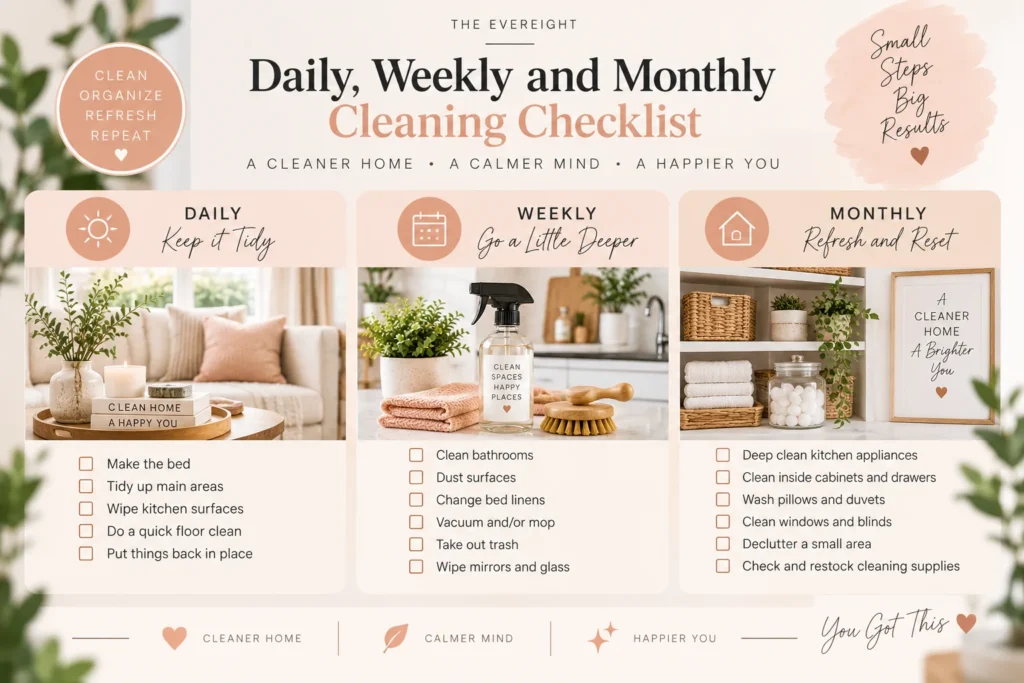
A cleaning checklist is most useful when it tells you what can wait.
Without frequency categories, every dusty shelf, full laundry basket, smudged mirror, and dirty floor competes for attention at once. A daily, weekly, and monthly framework separates immediate household maintenance from tasks that can be handled later.
This checklist is intentionally flexible. Homes differ in size, materials, household members, pets, climate, and use. Treat the frequencies as starting points, then adjust them according to how quickly each area actually needs attention.
How to Use This Checklist
Start with the daily essentials and a small weekly core. Do not add every monthly task immediately.
If a task remains clean and functional beyond the suggested frequency, extend the interval. If it needs attention sooner, shorten it.
Always follow manufacturer instructions for appliances, finishes, flooring, furniture, filters, and cleaning products. Product labels and material requirements take priority over a generic checklist.
Daily Cleaning Checklist
Daily work should focus on mess that affects food preparation, hygiene, safety, movement, and tomorrow’s routine.
Kitchen
- Handle dishes or load/unload the dishwasher as appropriate.
- Wipe food-preparation surfaces after use.
- Put food away safely.
- Address spills and crumbs.
- Check the sink.
- Remove rubbish when needed.
- Return frequently used ingredients and tools.
You do not need to polish every appliance each day.
Bathroom
- Address obvious sink or counter mess.
- Hang towels so they can dry appropriately.
- Deal with spills or standing water.
- Return toiletries to their homes.
A full bathroom clean can remain a weekly task unless household use requires more frequent attention.
Living Areas
- Return obvious out-of-place objects.
- Clear key functional surfaces.
- Gather cups, dishes, and rubbish.
- Reset blankets or cushions if that helps the room function.
Bedrooms
- Put dirty clothes in the hamper.
- Return clothing or accessories that have easy homes.
- Keep walkways clear.
- Make the bed if it is useful to your routine; it is not a cleanliness requirement.
Entryway
- Keep the walking path clear.
- Return shoes, keys, and bags to their zones.
- Move outgoing items toward their next action.
Laundry
Laundry does not have to happen daily. The daily task is simply preventing dirty or clean clothes from becoming unmanaged piles.
Weekly Cleaning Checklist
Weekly tasks address recurring buildup across the home.
Kitchen
- Clean the sink more thoroughly using an appropriate method.
- Wipe the stovetop according to its care instructions.
- Clean frequently touched exterior surfaces as needed.
- Review food that should be used soon.
- Wipe obvious refrigerator spills.
- Clean the kitchen floor appropriately.
- Reset pantry or food-storage categories that have drifted.
Bathroom
- Clean the toilet with an appropriate product.
- Clean sink and counter.
- Clean mirror.
- Address shower or tub surfaces.
- Clean floor.
- Empty rubbish.
- Replace towels according to household needs.
- Restock routine supplies.
Use appropriate ventilation and never mix cleaning chemicals unless a manufacturer specifically directs it.
Bedrooms
- Change bedding according to your household routine and needs.
- Dust accessible surfaces as needed.
- Vacuum, sweep, or otherwise care for flooring appropriately.
- Empty rubbish.
- Return clothing and personal items.
Living Room
- Dust accessible high-use surfaces.
- Clean floors appropriately.
- Reset books, toys, media, or hobby categories.
- Address upholstery crumbs or pet hair as needed.
- Wipe frequently touched surfaces when appropriate.
Entryway
- Clean the floor according to traffic and weather.
- Reset shoes and bags.
- Remove items waiting to leave the home.
- Shake out or clean suitable mats as needed.
Home Office
- Clear the work surface.
- Process paper requiring action.
- Empty rubbish.
- Dust accessible equipment carefully according to manufacturer guidance.
- Reset office supplies.
Laundry Area
- Wipe obvious detergent residue or spills.
- Return supplies.
- Check the area for lost items.
- Keep appliance surroundings clear according to manufacturer instructions.
Monthly Cleaning Checklist
Monthly tasks are better treated as a rotating menu than a mandatory single-day marathon.
Choose several each month according to what your home needs.
Kitchen
- Review and wipe pantry shelves in sections.
- Check for expired or unwanted pantry items using appropriate food-safety guidance.
- Clean selected appliance interiors or components according to manufacturer instructions.
- Wipe cabinet fronts where needed.
- Clean bins or rubbish containers as appropriate.
- Review food-storage containers and lids.
Bathroom
- Address less-accessible dust.
- Review toiletries and dispose of products appropriately.
- Clean storage containers and organizers as needed.
- Inspect areas around plumbing for leaks or moisture.
- Wash suitable shower curtains, mats, or textiles according to care instructions.
Bedrooms and Closets
- Review one clothing category.
- Dust less-accessible surfaces.
- Vacuum or clean under movable furniture when practical.
- Reset a drawer, shelf, or closet zone.
- Review items waiting for repair or donation.
Living Areas
- Clean under or behind safely movable furniture.
- Address vents or accessible grilles according to household-system guidance.
- Review books, toys, media, or décor that has accumulated.
- Clean suitable washable textiles according to care labels.
Office and Paperwork
- File completed reference papers.
- Shred or securely dispose of sensitive papers no longer required.
- Review downloads and digital files if digital clutter affects work.
- Back up important files according to your chosen system.
Utility and Storage Areas
- Check household backstock.
- Review batteries, bulbs, tools, and maintenance supplies.
- Inspect storage for moisture or pest signs.
- Return seasonal items to clearly labeled locations.
Quarterly or Seasonal Cleaning Tasks
Some tasks fit better every few months or when seasons change.
Possible examples include:
- Washing appropriate windows or screens.
- Reviewing seasonal clothing.
- Cleaning selected light fixtures safely.
- Rotating mattresses if the manufacturer recommends it.
- Reviewing smoke and carbon-monoxide alarm maintenance according to manufacturer and local guidance.
- Cleaning or replacing household-system filters according to their specific schedules.
- Reviewing outdoor or balcony areas.
- Cleaning behind larger appliances only when it can be done safely and in accordance with manufacturer instructions.
Do not use a generic seasonal checklist to override appliance or safety requirements.
Annual or As-Needed Tasks
Annual cleaning is not one universal list.
Certain areas may need professional service, inspection, or maintenance rather than DIY cleaning. Examples can include specific heating, cooling, ventilation, chimney, appliance, or building systems depending on the home.
Follow manufacturer, property-management, professional, and local safety guidance for these systems.
The household checklist should distinguish ordinary cleaning from maintenance that requires technical expertise.
A Manageable Weekly Distribution
Instead of completing the entire weekly list at once, divide it.
Monday: Bathroom Tuesday: Bedrooms Wednesday: Living room and office Thursday: Kitchen detail work Friday: Floors/high-traffic areas Weekend: Laundry, reset, and one monthly task
Keep one day free or use it as catch-up.
A 15-Minute Daily Reset Checklist
If you want one short daily routine, try:
Minutes 1-5: Kitchen dishes, food, and main work surface.
Minutes 6-10: Return items in the living room and entryway.
Minutes 11-13: Laundry and bathroom quick reset.
Minutes 14-15: Prepare one thing that makes tomorrow easier.
This is a maintenance reset, not the full daily checklist.
Cleaning Checklist for a Busy Week
When time is limited, prioritize:
1. Food-related mess and dishes. 2. Rubbish and spills. 3. Bathroom essentials. 4. Necessary laundry. 5. Clear floors and key surfaces. 6. Anything affecting safety or normal household function.
Dusting decorative objects can wait.
A reduced checklist is still a functioning routine.
Cleaning Checklist for a Small Apartment
Small homes often need shorter sessions but more frequent resets because clutter and crumbs are visible quickly.
Focus on the kitchen work area, bathroom, floor traffic paths, laundry, and keeping multipurpose surfaces usable.
Do not assume a small home requires fewer organization decisions. When a dining table is also a desk, the reset between activities becomes part of the routine.
Cleaning Checklist for a Larger Home
Do not automatically clean every low-use room every week.
Divide the home into high-, medium-, and low-use zones. High-use bathrooms and living areas may need weekly attention, while a rarely used guest room may need only a periodic reset.
This keeps the workload proportional to use rather than square footage alone.
What Belongs on a Checklist – and What Does Not?
A checklist should contain repeatable actions.
“Make house nice” is not useful. “Clear kitchen preparation counter” is.
Avoid filling the list with aspirational projects such as reorganizing the entire garage. Projects need their own plan and time block.
Likewise, home maintenance tasks with specialized requirements should not be disguised as routine cleaning.
How to Customize Cleaning Frequency
Ask four questions:
How quickly does it become dirty? High-traffic floors may need more attention.
Does delay create a hygiene or safety issue? Food spills deserve prompt action.
Does the manufacturer specify a schedule? Follow it.
How much does the task affect daily function? A cluttered work surface may matter more than dust on a decorative shelf.
These questions create a more useful schedule than blindly following a universal chart.
Cleaning-Supply Safety Reminder
Read labels before use. Use products only on appropriate surfaces and with required ventilation or protective measures.
Never mix household cleaners unless explicitly directed by the manufacturer. Store products securely and in their original labeled containers, away from children and pets.
A checklist should never encourage rushing through chemical use.
How to Keep the Checklist From Becoming Overwhelming
Do not check every box for the sake of completion.
Use the checklist as a menu of responsibilities and frequencies. Highlight the tasks relevant to your home. Delete what does not apply.
If a monthly list contains 25 tasks, rotate five per week or several per month rather than creating one enormous “monthly cleaning day.”
The checklist serves you, not the other way around.
EverEight Pro Tip
Put a small dot beside any checklist item you skipped for three consecutive cycles. Then decide whether it needs a better time, a clearer owner, a lower frequency, or removal from the list. Repeatedly skipped tasks are data.