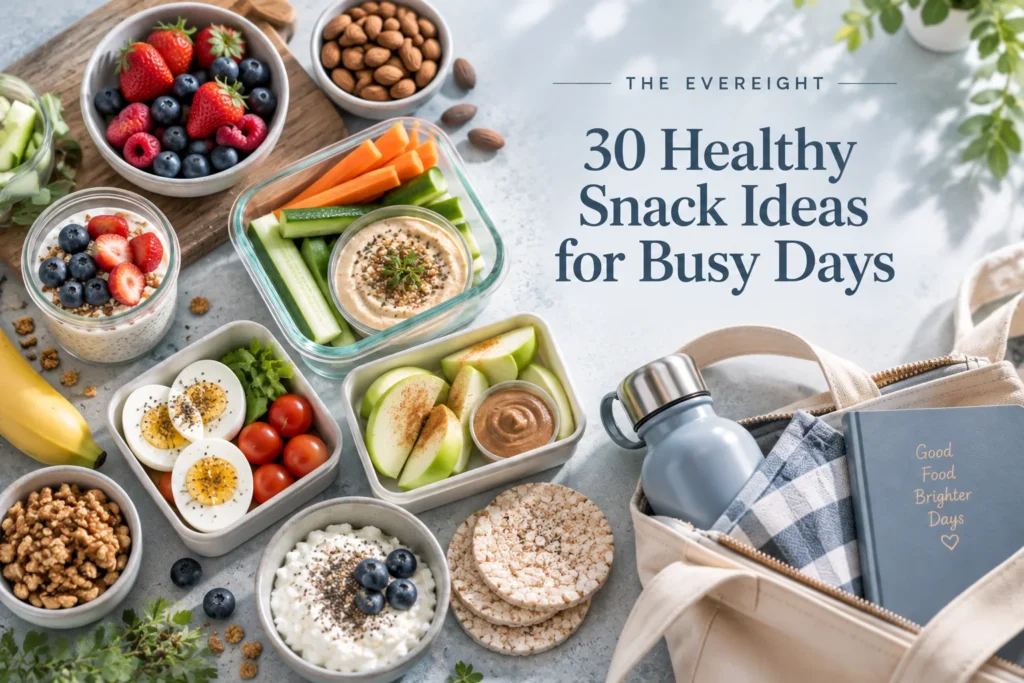
A good snack solves a practical problem.
It bridges a long gap between meals, provides fuel before or after activity, or prevents mild hunger from becoming “I will eat anything available” hunger. It does not need to be tiny, low-calorie, or marketed as a diet food.
The most satisfying snacks often combine two qualities: protein, fiber, produce, or another source of staying power.
Portions should match your hunger and the time until the next meal.
Quick Answer
For a more satisfying snack, pair a fruit, vegetable, or whole-grain food with a protein or fat source. Examples include fruit with nuts, yogurt with berries, eggs with whole-grain crackers, vegetables with hummus, or edamame. Choose single-component snacks when that is enough; not every snack needs to be a mini-meal.
1. Apple + Peanut or Nut Butter
Fruit provides carbohydrate, water, and fiber; nut butter adds fat and some protein.
Choose a portion that matches your hunger.
Use a seed butter or other suitable alternative for allergies.
2. Banana + Nuts
This requires no cooking and travels reasonably well.
Banana provides carbohydrate; nuts add fat, protein, and texture.
Pre-portion nuts if eating from a large bag makes it hard to notice quantity.
3. Greek-Style Yogurt + Berries
A higher-protein yogurt can make fruit more filling.
Fresh or frozen berries both work.
Check added sugar if that matters to you.
Use a suitable non-dairy alternative if needed, noting that protein content varies widely.
4. Cottage Cheese + Pineapple or Other Fruit
Cottage cheese provides protein.
Fruit adds sweetness and fiber.
Check sodium if you are managing sodium intake.
5. Boiled Egg + Fruit
Simple, portable with proper refrigeration, and balanced.
Prepare eggs safely and keep perishable foods at appropriate temperatures.
6. Edamame
Shelled edamame provides protein, fiber, and carbohydrate.
Frozen versions can be prepared quickly.
Choose salted or unsalted based on preference and overall sodium intake.
7. Carrots + Hummus
Crunchy vegetables plus a legume-based dip create fiber, flavor, and some protein.
Other vegetables such as cucumber, peppers, or snap peas can work.
8. Whole-Grain Crackers + Cheese
Crackers provide carbohydrate; cheese adds protein and fat.
Add fruit or vegetables if you want more volume.
Choose portions and cheese type based on your needs.
9. Whole-Grain Crackers + Tuna
A small tuna portion can create a higher-protein snack.
Choose preparation and storage carefully.
People who need to consider mercury exposure should follow current fish-consumption guidance.
10. Toast + Avocado + Egg
This is closer to a mini-meal.
It works when the next full meal is several hours away.
Use a smaller version if hunger is modest.
11. Oatmeal + Milk
A small bowl of oats can be a warm snack.
Milk or a higher-protein alternative makes it more substantial.
Add cinnamon or fruit for flavor.
12. Overnight Oats Cup
Prepare oats with milk or suitable alternative, fruit, and optional yogurt or seeds.
Keep refrigerated.
This is useful for workdays when you need something more substantial than a piece of fruit.
13. Chia Pudding
Chia seeds absorb liquid and provide fiber and fat.
Use a suitable milk or alternative.
Because chia is fiber-rich, introduce it gradually if you are not accustomed to high-fiber foods.
14. Fruit + a Small Handful of Nuts
This formula works with many combinations.
Orange + almonds.
Pear + walnuts.
Grapes + pistachios.
Use allergen-safe alternatives where necessary.
15. Roasted Chickpeas
Roasted chickpeas can provide crunch, fiber, and some protein.
Check sodium in packaged versions.
They are more filling than many refined snack foods for some people.
16. Air-Popped or Lightly Prepared Popcorn
Popcorn is a whole grain.
Portion and toppings determine much of the final energy and sodium.
Pair it with a protein-containing food if you need a more substantial snack.
17. Vegetables + Yogurt-Based Dip
Use plain yogurt with herbs or a prepared dip that suits your dietary needs.
This can be more satisfying than vegetables alone.
Keep refrigerated.
18. Mini Sandwich
Use bread or a small roll with a protein filling and vegetables.
Examples include turkey, egg, tuna, tofu, or another suitable filling.
A mini sandwich is useful when hunger is too strong for a light snack.
19. Half a Leftover Wrap
Snacks do not need to come from snack-food packaging.
Half of a balanced wrap can be practical.
Store leftovers safely.
20. Soup Cup
A small portion of vegetable, bean, lentil, or protein-containing soup can work well.
Check sodium in packaged soups if relevant.
Use an insulated container if transporting hot soup.
21. Yogurt + Oats
Stir a small amount of oats or whole-grain cereal into yogurt.
This adds texture and carbohydrate.
Add fruit if desired.
22. Milk + Banana
A glass of milk or suitable higher-protein alternative with a banana is quick and portable in an insulated setup.
It can be useful after activity.
Do not leave perishable beverages unrefrigerated beyond safe limits.
23. Tofu Snack Bowl
Use chilled or cooked tofu with cucumber, seasoning, and a small amount of sauce.
This is a savory option for people who do not want sweet snacks.
Keep it refrigerated.
24. Bean Dip + Whole-Grain Crackers
A bean-based dip provides fiber and some protein.
Pair with crackers or vegetables.
Check sodium and serving size in packaged dips.
25. Homemade Trail Mix
Combine nuts or seeds with a smaller amount of dried fruit and, if desired, whole-grain cereal.
Trail mix is energy-dense.
It is useful when you need compact fuel, but a very large handful can be more food than expected.
26. Fresh Fruit + Cheese
Apple, grapes, pear, or berries can pair with cheese.
This provides sweet/savory contrast and a mix of carbohydrate, protein, and fat.
Use an appropriate alternative if dairy is unsuitable.
27. Rice Cake + Nut or Seed Butter
Rice cakes are light and crisp but may not be very filling alone.
Adding nut or seed butter increases staying power.
Fruit slices can add flavor.
28. Leftover Chicken or Tofu + Vegetables
A few bites of dinner leftovers can make an excellent snack.
There is no nutrition rule requiring snacks to look different from meals.
Store and reheat safely.
29. Smoothie With Food-Based Ingredients
Blend fruit with milk or suitable alternative and yogurt, tofu, or another protein source.
Smoothies can be convenient, but drinking a very large blend quickly may be less satisfying than eating the ingredients whole for some people.
Keep portions intentional.
30. A Planned Treat + Something Satisfying
Healthy eating can include cookies, chocolate, or another favorite food.
If a treat alone leaves you hungry, pair a reasonable portion with fruit, yogurt, milk, or nuts.
This avoids turning “healthy snack” into a rule that excludes enjoyable foods.
How to Choose a Snack Based on Hunger
Mild hunger
Fruit, yogurt, vegetables, or a small handful of nuts may be enough.
Moderate hunger
Pair two components, such as fruit + yogurt or crackers + cheese.
Strong hunger with hours until dinner
Choose a mini-meal: sandwich, oats, soup, leftovers, or a larger balanced snack.
Do not expect cucumber slices to solve meal-level hunger.
Snacks for Work
Choose foods that:
- Are easy to store.
- Do not create a large mess.
- Fit available refrigeration.
- Can be eaten in a short break.
- Do not require complicated preparation.
Keep one shelf-stable backup such as nuts, whole-grain crackers, or another suitable option.
Snacks for the Car or Travel
Food safety matters.
Shelf-stable options include certain fruits, nuts, roasted legumes, whole-grain crackers, and suitable packaged foods.
Use a cooler for yogurt, eggs, cheese, meat, tofu, and other perishables.
Do not leave perishable foods in a hot vehicle.
Snacks Before Exercise
If you are hungry before activity, a carbohydrate-rich snack that is easy to digest can be useful.
Examples include fruit, toast, oats, or crackers.
Large amounts of fat or fiber immediately before intense exercise can cause discomfort for some people.
Timing and tolerance are individual.
Snacks After Exercise
A snack containing protein and carbohydrate can be useful when the next meal is not soon.
Examples:
- Yogurt + fruit.
- Milk + banana.
- Egg + toast.
- Tofu + rice.
- Small sandwich.
If a balanced meal is coming shortly, a special recovery snack may be unnecessary.
Snacks for Weight Management
Snacking does not inherently cause weight gain or weight loss.
The effect depends on the total pattern.
Planned snacks can prevent excessive hunger.
Unnoticed grazing can add substantial intake without much satisfaction.
Ask whether the snack solves hunger or is simply automatic.
How to Stop Desk Grazing
Do not keep a large open package beside your keyboard.
Serve the snack into a bowl or portion.
Eat it deliberately.
If possible, take a brief break from the screen.
The goal is awareness, not rigid control.
Packaged Snacks Can Be Healthy Too
Convenience foods are not automatically poor choices.
Look for a useful combination of:
- Protein.
- Fiber.
- Whole-food ingredients.
- Reasonable sodium or added sugar for your needs.
- A portion that fits the situation.
Marketing words such as “keto,” “natural,” “protein,” or “clean” do not guarantee nutritional quality.
Allergies and Dietary Restrictions
Many common snack lists rely heavily on dairy, nuts, wheat, soy, or legumes.
Substitute based on your needs.
Read labels carefully for allergens and cross-contact warnings.
People with medically diagnosed allergies should follow their clinician’s emergency and avoidance guidance.
Food Safety for Packed Snacks
Keep cold foods cold.
Use insulated bags and ice packs where appropriate.
Wash produce.
Avoid cross-contamination.
Follow current food-safety guidance for storage times and temperatures.
When in doubt about a perishable food that has been stored unsafely, discard it.
Common Snack Mistakes
Making every snack tiny: Strong hunger remains.
Choosing only refined carbohydrates: Hunger returns quickly for some people.
Eating from a large package: Portions become invisible.
Buying expensive “diet snacks”: Ordinary food may work better.
Ignoring beverages: Sugary drinks become the snack plus extra energy.
Treating treats as forbidden: Restriction can make them harder to manage.
Build a Personal Snack Matrix
Choose:
- 3 fruits.
- 3 proteins.
- 3 crunchy foods.
- 3 shelf-stable options.
- 3 refrigerated options.
Mix them based on the day.
You do not need 30 foods in the house at once.
EverEight Pro Tip
Keep one “2 p.m. snack” at work that you enjoy enough to choose consistently. The best backup snack is not the one with the most impressive nutrition label; it is the one that prevents you from reaching late afternoon ravenous and is easy enough to keep stocked.