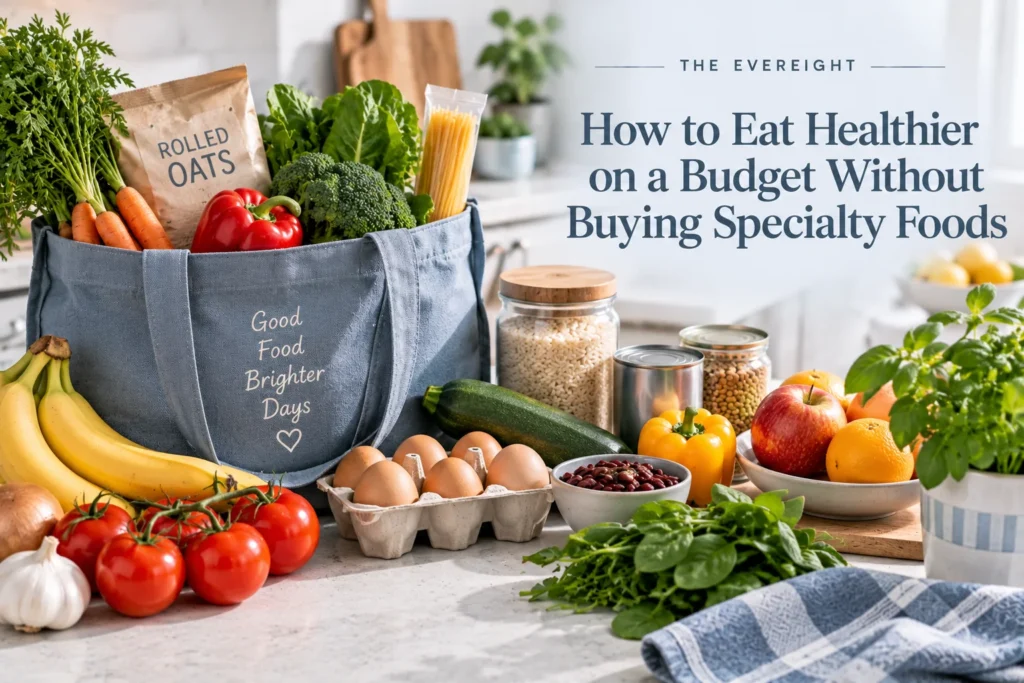
Healthy eating is often marketed through expensive products: powders, bars, organic snack packs, specialty flours, superfood blends and premium meal kits.
None of those is required.
A nutritious diet can be built around ordinary staples, affordable protein foods, seasonal or frozen produce, basic grains and practical cooking. The biggest savings often come from reducing waste and using ingredients across several meals rather than finding the cheapest individual food.
Quick Answer
Plan around low-cost staples, compare unit prices, use frozen and canned produce, choose affordable protein sources, buy only the fresh food you will use, cook extra portions strategically and freeze leftovers. Spend money on foods you genuinely eat rather than products with a “health” label.
Start With a Budget, Not a Perfect Menu
Know roughly what you can spend.
Then allocate it across:
- Staple carbohydrates.
- Protein foods.
- Vegetables.
- Fruit.
- Fats/flavor.
- Breakfasts.
- Snacks.
- Convenience foods that prevent expensive last-minute purchases.
A realistic budget includes some convenience.
Build Around Staple Carbohydrates
Affordable options often include:
- Oats.
- Rice.
- Potatoes.
- Pasta.
- Bread.
- Corn products.
- Other locally common grains or roots.
Whole-grain options can add fiber, but compare price and what your household will actually eat.
Throwing away a “healthier” product is not economical.
Choose Affordable Proteins
Prices vary by location, but useful options may include:
- Eggs.
- Beans.
- Lentils.
- Canned fish.
- Tofu.
- Peanut butter.
- Larger containers of yogurt.
- Milk or suitable alternatives.
- Chicken portions.
- Less expensive lean meat cuts.
- Frozen protein foods with suitable nutrition.
Compare edible yield and number of meals.
Use Legumes Where They Fit
Beans and lentils can stretch meals.
Add them to:
- Soup.
- Chili.
- Curry.
- Rice dishes.
- Pasta sauce.
- Tacos.
- Bowls.
They provide protein, fiber and carbohydrate.
People with allergies or gastrointestinal conditions should choose appropriate alternatives.
Frozen Vegetables Are Valuable
Frozen produce can be nutritionally useful and reduce spoilage.
Buy plain vegetables or mixes that work across meals.
Use them in:
- Stir-fries.
- Soup.
- Pasta.
- Rice.
- Eggs.
- Side dishes.
You can cook exactly what you need.
Canned Vegetables Can Work Too
Canned tomatoes, corn, peas, beans and other vegetables can be inexpensive and shelf-stable.
Check sodium when relevant.
Draining or rinsing some canned foods can reduce surface sodium.
Choose products based on the full meal, not a rule that canned food is unhealthy.
Buy Fresh Produce Strategically
Mix long-lasting and short-lasting produce.
Use delicate items first.
Examples of longer-lasting choices can include carrots, cabbage, apples, citrus, potatoes and onions when stored appropriately.
Storage life varies with climate and conditions.
Do not buy a large quantity solely because the unit price is lower if it will spoil.
Seasonal and Local Pricing
Produce prices can change dramatically with season and location.
Use the vegetable that is affordable now.
A recipe calling for asparagus does not require asparagus if green beans, cabbage or another vegetable works.
Flexible cooking saves money.
Compare Unit Prices
Shelf price can mislead.
Compare cost per weight, volume or usable serving where labels allow.
But bigger is not automatically cheaper if:
- It spoils.
- You dislike it.
- Storage is limited.
- You overuse it simply because the package is large.
Value includes waste.
Store Brands Can Be Excellent
Store-brand oats, rice, beans, frozen vegetables, canned tomatoes and other basics may be nutritionally similar to branded versions.
Compare:
- Ingredients.
- Nutrition label.
- Package size.
- Unit price.
Pay for meaningful differences, not packaging.
Use Meat as Part of the Meal
If meat is expensive, reduce the amount per serving while keeping the meal satisfying.
For example:
- Chicken + beans in a bowl.
- Meat + lentils in sauce.
- Beef + vegetables in stir-fry.
- Smaller meat portion + potatoes + vegetables.
This is not about making protein inadequate.
It is about using a mix of foods.
Cook Once, Use Twice
A tray of chicken can become:
- Dinner.
- Lunch wrap.
- Grain bowl.
A pot of lentils can become:
- Curry.
- Soup.
- Taco filling.
Repurpose intentionally.
Article #47 explains flexible meal prep.
Freeze Before Food Becomes Waste
Do not wait until leftovers look questionable.
If you know a portion will not be eaten soon, freeze it promptly when the food is suitable for freezing.
Label it.
Use a freezer inventory.
Follow current food-safety guidance.
Create a “Use First” Shelf
Keep open or perishable foods visible.
Plan the next meal around them.
A half bag of spinach hidden behind drinks is expensive compost.
Visibility is a budget tool.
Limit Specialty “Health” Foods
You do not need:
- Detox drinks.
- Fat-burning teas.
- Expensive protein snacks.
- Superfood powders.
- Specialty diet cookies.
- Premium low-carb replacements.
- Supplements marketed as meal substitutes without a medical need.
Ordinary foods can meet most everyday nutrition needs.
Convenience Can Save Money
A bag of frozen vegetables may cost more per unit than a whole fresh vegetable but still save money if the fresh version repeatedly spoils.
Pre-cooked grains, canned beans, or prepared protein may prevent takeout on a busy night.
Compare convenience food with the realistic alternative, not the cheapest theoretical meal.
Budget Breakfasts
Examples:
- Oats + fruit + milk/suitable alternative.
- Eggs + toast.
- Yogurt + oats.
- Peanut butter toast + fruit.
- Leftovers.
Breakfast does not require branded breakfast products.
Budget Lunches
Examples:
- Leftovers.
- Bean and rice bowl.
- Egg sandwich.
- Lentil soup + bread.
- Tuna or suitable protein sandwich.
- Pasta salad with vegetables and protein.
Pack lunch when it saves money, but do not make preparation so complicated that you stop doing it.
Budget Dinners
Examples:
- Lentil curry + rice.
- Pasta + tomato sauce + vegetables + protein.
- Egg-based meal + potatoes + vegetables.
- Chicken + rice + frozen vegetables.
- Bean chili.
- Soup + bread + protein-rich side.
- Stir-fry using available vegetables.
Seasoning creates variety from inexpensive bases.
Budget Snacks
Examples:
- Fruit.
- Popcorn.
- Boiled eggs.
- Homemade yogurt/oat combinations.
- Peanut butter + fruit.
- Roasted legumes.
- Portion of nuts where affordable.
- Crackers + protein.
Individually packaged snacks often cost more, though they may be worth it for convenience or portioning.
Shop With a Flexible List
Write:
- 2 proteins.
- 3 vegetables.
- 2 fruits.
- 2 carbohydrate staples.
- Breakfast base.
- Snacks.
- Emergency meal.
If one vegetable is unusually expensive, substitute.
A rigid recipe list makes price changes harder to absorb.
Use Sales Carefully
A sale saves money only if you use the product.
Stock up on shelf-stable or freezable staples you regularly consume.
Do not buy unfamiliar “healthy” foods simply because they are discounted.
Organic vs Conventional
Organic food can be a preference, but eating a variety of fruits and vegetables is more important than avoiding produce because organic versions are unaffordable.
Wash produce appropriately.
Follow local food-safety guidance.
Healthy Eating Without a Membership Warehouse
Bulk shopping can reduce unit prices but requires storage, cash upfront and enough consumption.
Small households may save more through smaller packages and lower waste.
Do the math for your situation.
Track Waste for One Week
Write down food discarded because it spoiled or was not eaten.
At the end of the week, estimate its cost.
This often reveals savings opportunities faster than coupon hunting.
Common waste categories:
- Produce.
- Leftovers.
- Bread.
- Open sauces.
- Dairy or alternatives.
- Bulk snacks.
A Sample Low-Waste Ingredient Map
Buy:
- Oats.
- Eggs.
- Rice.
- Chicken or tofu.
- Beans.
- Frozen mixed vegetables.
- Cabbage.
- Carrots.
- Fruit.
- Yogurt or suitable alternative.
- Bread.
- Tomato sauce.
Use across:
- Breakfast.
- Bowls.
- Stir-fry.
- Soup.
- Sandwiches.
- Snacks.
The exact list is only an example. Local prices should determine your version.
Weight Management on a Budget
Weight management does not require special products.
Balanced ordinary meals can support a sustainable energy intake.
Focus on:
- Produce.
- Protein.
- Fiber-rich staples.
- Water.
- Portion awareness.
- Planned snacks.
- Repeatable meals.
Do not spend limited food money on products promising rapid weight loss.
When Food Access Is Limited
If your budget does not reliably cover enough food, the priority is adequate nourishment, not dieting.
Community food programs, benefits, school/community resources and healthcare social services may be able to help depending on location.
Food insecurity is not a willpower problem.
EverEight Pro Tip
Track “cost per eaten meal,” not just cost per package. A slightly more expensive ingredient that becomes four meals can be better value than a bargain ingredient that becomes one meal and three servings of waste.