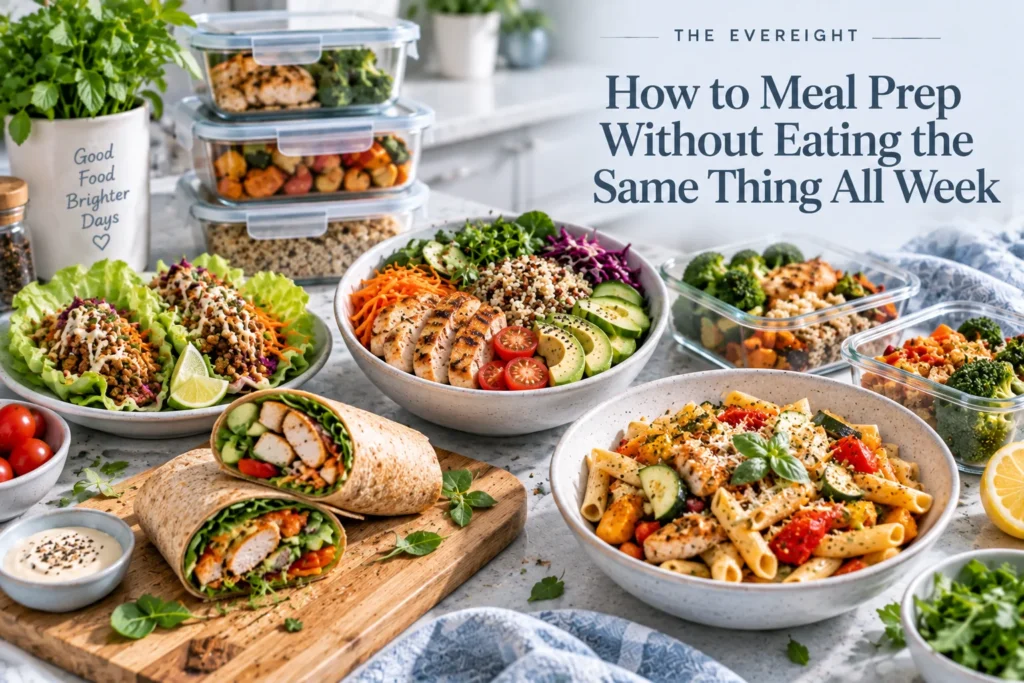
Meal prep has an image problem.
It is often shown as five identical containers filled with the same chicken, rice and vegetables. That can work for people who enjoy repetition, but it is not the only way to prepare food ahead.
A flexible meal-prep system prepares components, not necessarily complete meals. Cook a few versatile foods, store them safely, and change sauces, vegetables, formats and sides through the week.
Quick Answer
Prep two proteins, one or two carbohydrate bases, several vegetables and two distinct flavor options. Assemble only some meals in advance and leave the rest as components. Use the same ingredient in different formats – bowl, wrap, salad, soup, pasta or plate – and freeze portions you will not safely eat soon.
Meal Planning and Meal Prep Are Different
Meal planning decides what you might eat.
Meal prep completes some of the work in advance.
You can plan without prepping.
You can also prep one ingredient without creating a full weekly menu.
Article #46 explains the planning system; this guide focuses on reducing cooking work.
Start With the Bottleneck
Ask what slows you down most.
Maybe it is:
- Cooking protein.
- Washing vegetables.
- Waiting for rice.
- Packing lunch.
- Deciding what to eat.
- Chopping ingredients after work.
Prep the bottleneck.
Do not prepare tasks that are already easy.
The 2 + 2 + 2 Formula
A flexible week can begin with:
- 2 protein options.
- 2 produce preparations.
- 2 flavor profiles.
Add one or two carbohydrate bases as needed.
For example: Protein: chicken + lentils. Produce: roasted vegetables + salad vegetables. Carbohydrate: rice + bread/wraps. Flavor: herby yogurt-style sauce + tomato/chili-style sauce.
The ingredients can become several meals.
Change the Format
The same chicken and vegetables can become:
- Rice bowl.
- Wrap.
- Salad.
- Pasta addition.
- Sandwich.
- Soup add-in.
- Plate with potatoes.
Texture and format change the experience even when ingredients overlap.
Change the Sauce
Flavor is one of the easiest ways to avoid repetition.
Possible profiles:
- Lemon-herb.
- Tomato-garlic.
- Curry-inspired.
- Soy-ginger-style.
- Salsa.
- Yogurt-herb.
- Tahini-lemon.
- Pesto-style.
Choose sauces appropriate to allergies, dietary needs and food-safety requirements.
Keep perishable sauces refrigerated.
Prep Neutral Bases
Highly seasoned food can be harder to repurpose.
A neutral grain, plain roasted vegetables, or simply seasoned protein can take on different flavors later.
Add final sauces at serving time.
This also helps households where people prefer different seasonings.
Cook One Ingredient Two Ways
If you buy a large quantity of vegetables, do not necessarily roast all of them.
Roast half.
Keep half raw for salads, wraps or quick stir-fries.
Different cooking methods change texture.
Use the Freezer Strategically
The freezer creates variety across weeks.
Instead of eating four portions of chili in four days, eat one or two and freeze the rest.
Next week, freeze another meal.
After several weeks, you have a small library of different homemade options.
Label containers with the food and date.
Do Not Prep More Than You Can Safely Store
Food quality and safety matter.
Some foods hold better than others.
Follow current food-safety guidance for refrigeration and freezing.
If your planned storage period exceeds safe refrigerated storage, freeze appropriate portions promptly rather than stretching leftovers across an entire week.
Cool Food Properly
Large, deep containers can cool slowly.
Use storage practices consistent with current food-safety recommendations, including appropriate containers and prompt refrigeration.
Do not leave cooked food at room temperature for extended periods.
When in doubt, consult current official guidance for the food and storage conditions.
Separate Wet and Crisp Ingredients
For better texture:
- Keep dressing separate from salad.
- Keep crunchy toppings separate.
- Store bread away from wet fillings.
- Add fresh herbs at serving time.
- Keep sauces separate when they soften the base.
Meal prep should save time without intentionally creating soggy food.
Prep Lunches Differently From Dinners
Lunch may need:
- Portability.
- A leak-resistant container.
- Easy reheating.
- No strong odor in a shared office.
- Food that can be eaten cold if necessary.
Dinner can use larger components stored at home.
Plan for the context, not just nutrition.
Five Mix-and-Match Meal Examples
Meal 1: Grain bowl
Rice + protein + roasted vegetables + sauce.
Meal 2: Wrap
Protein + raw vegetables + sauce + wrap.
Meal 3: Salad
Greens + protein + grain or bread + vegetables + dressing.
Meal 4: Quick skillet
Grain + vegetables + protein + different seasoning.
Meal 5: Soup shortcut
Broth or soup base + cooked vegetables + protein + grain/noodles.
One prep session, five formats.
Prep Breakfast Without Making Five Identical Jars
Use components.
Prepare:
- Washed fruit.
- Boiled eggs.
- Oats.
- Yogurt or suitable alternative.
- Bread.
- Nuts/seeds where suitable.
Then choose combinations each morning.
If you like overnight oats, make only the number you genuinely want.
Snack Prep
Wash or portion:
- Fruit.
- Vegetables.
- Nuts.
- Crackers.
- Yogurt.
- Eggs.
- Edamame.
- Suitable dips.
Do not create tiny “diet portions” that leave you hungry.
The purpose is convenience.
How Long Should Meal Prep Take?
There is no correct duration.
A beginner session can be 45-90 minutes if it meaningfully reduces weekday work.
But even 20 minutes can help:
- Cook rice.
- Boil eggs.
- Wash fruit.
- Portion tomorrow’s lunch.
Do not make prep itself a second job.
A Low-Effort Prep Sequence
1. Start the longest cooking item. 2. Heat the oven if needed. 3. Prepare vegetables. 4. Cook protein. 5. Mix a sauce. 6. Cool foods safely. 7. Pack only the next few meals. 8. Freeze appropriate extras. 9. Clean the kitchen.
Work in parallel only when you can do so safely.
Avoid Cross-Contamination
Use safe handling practices for raw meat, poultry, fish and eggs.
Keep raw foods separate from ready-to-eat foods.
Wash hands and appropriate surfaces.
Do not wash raw poultry in ways that can spread contamination.
Use current food-safety guidance for cooking temperatures and storage.
Containers: What Actually Matters
Useful features may include:
- Food-safe materials.
- Secure lids.
- Appropriate size.
- Freezer compatibility if needed.
- Microwave compatibility if you plan to reheat in the container and the manufacturer permits it.
- Easy cleaning.
- Stackability.
You do not need an expensive matching set to start.
Glass vs Plastic Containers
Both can be useful.
Glass is heavier and breakable but resists staining and can be convenient for reheating when the specific product is rated for it.
Plastic is lighter and portable but varies in heat and stain resistance.
Follow manufacturer instructions.
Do not heat a container merely because it looks microwave-safe.
Meal Prep for Weight Management
Meal prep can support weight management by making balanced meals easier to access.
It should not turn into five under-portioned meals you dread eating.
Include adequate protein, produce, carbohydrate and flavor.
Adjust portions to hunger and activity.
Article #48 explains portion awareness without obsessive tracking.
Meal Prep on a Budget
Choose ingredients that overlap.
Use seasonal or frozen produce.
Cook affordable staples.
Freeze extras before they spoil.
Repurpose ingredients instead of buying a unique sauce, herb and vegetable for every recipe.
Article #49 covers healthy eating on a budget.
When You Hate Leftovers
Prep ingredients rather than cooked meals.
Wash vegetables.
Marinate or portion ingredients safely.
Prepare sauces.
Measure dry ingredients.
Freeze raw or cooked components according to safe handling guidance.
Then cook a fresh meal quickly.
Common Meal-Prep Mistakes
Preparing seven days of refrigerated food without checking safe storage: Safety is ignored.
Making everything identical: Boredom arrives.
Using one sauce: Every meal tastes the same.
Prepping delicate ingredients too early: Texture suffers.
Buying special containers before testing the habit: Money is wasted.
Making portions too small: Hunger undermines the plan.
Spending half the weekend cooking: The system is not sustainable.
A Beginner Sunday Example
Cook:
- One grain.
- One protein.
- One legume or second protein.
- One tray of vegetables.
Prepare:
- Raw salad vegetables.
- Two sauces.
- Two lunch portions.
Freeze:
- Extra cooked portions not intended for near-term refrigerated use.
Leave:
- Some ingredients unassembled for later variety.
That is meal prep without five identical boxes.
EverEight Pro Tip
Before prepping an ingredient, name at least two different meals it can become. If you can think of only one, prepare a smaller amount. Versatility is the easiest protection against meal-prep boredom.