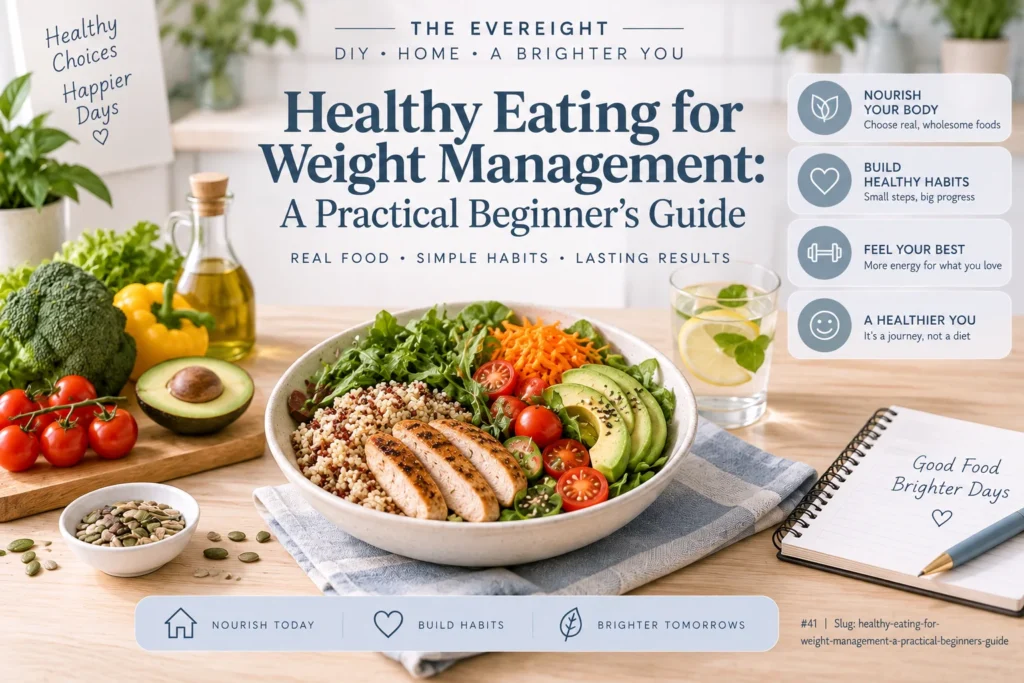
Healthy eating for weight management does not require a perfect menu, a forbidden-food list, or an aggressive diet.
Body weight is influenced by energy intake and expenditure over time, but real eating behavior is shaped by much more than arithmetic: hunger, food availability, sleep, stress, culture, budget, medications, health conditions, activity, and routine all matter. A useful eating pattern therefore needs to be nutritionally adequate, satisfying, flexible, and realistic enough to repeat.
This guide focuses on habits that can support gradual, sustainable weight management without promising a particular rate of loss or treating food as a moral test.
Quick Answer
Build most meals around vegetables or fruit, a protein source, a satisfying high-fiber carbohydrate when appropriate, and a source of fat or flavor. Choose water and other unsweetened drinks often, keep highly processed discretionary foods in proportion rather than declaring them forbidden, and adjust portions based on hunger, goals, activity, and individual needs. Consistency across weeks matters more than one meal.
What Healthy Weight Management Actually Means
For some people, the goal is weight loss. For others, maintaining weight, improving food quality, supporting strength, or reducing weight cycling may be more appropriate.
There is no single healthy body size or calorie target for everyone.
A clinician or registered dietitian can help individualize goals when you have a medical condition, take medications that affect appetite or weight, are pregnant or breastfeeding, have a history of disordered eating, or need therapeutic nutrition.
Start With Food Quality, Not Restriction
A practical pattern emphasizes foods that provide useful nutrition and satisfaction.
Examples include:
- Vegetables.
- Fruit.
- Protein-rich foods.
- Whole grains and other fiber-rich starches.
- Nuts and seeds where suitable.
- Unsaturated fats.
- Water and other low- or no-added-sugar beverages.
This does not require eliminating desserts, restaurant meals, or favorite cultural foods.
A pattern is defined by what happens most of the time.
Build a Balanced Plate
One flexible visual approach is to think in components rather than exact percentages.
Vegetables and fruit
Include produce you enjoy and can afford. Fresh, frozen, canned, and dried forms can all contribute, with differences in sodium, added sugar, and portion size worth checking.
Protein
Choose a source that fits the meal, such as eggs, poultry, fish, lean meat, tofu, tempeh, beans, lentils, yogurt, or other suitable options.
Carbohydrate
Potatoes, rice, oats, whole-grain bread, pasta, corn, plantains, and other staple foods can fit a healthy pattern.
Higher-fiber choices may support fullness and digestive health, but cultural and personal preferences matter.
Fat and flavor
Nuts, seeds, avocado, olive oil, dressings, sauces, cheese, and other fats can add satisfaction and nutrients. They are energy-dense, so portion awareness can be useful without treating them as bad foods.
Protein Can Help Meals Feel More Complete
Protein supports body tissues and is particularly relevant when someone is active or losing weight.
Instead of trying to maximize protein at every opportunity, include a meaningful source across meals.
The amount a person needs varies with body size, age, activity, health status, and other factors.
People with certain kidney or other medical conditions should seek individualized advice before substantially changing protein intake.
Fiber Is a Practical Weight-Management Tool
Fiber-rich foods can add volume and help meals feel satisfying.
Good sources include vegetables, fruit, whole grains, beans, lentils, nuts, and seeds.
Increase fiber gradually if your current intake is low, and drink adequate fluids.
A sudden large increase can cause gastrointestinal discomfort.
Carbohydrates Do Not Need to Be Eliminated
Carbohydrate foods provide energy and can contribute fiber, vitamins, minerals, and enjoyment.
The useful question is not “Are carbs bad?” but “What carbohydrate, how much, and what is it paired with?”
A bowl of oats with fruit and protein creates a different meal from a large serving of a refined snack food, even though both contain carbohydrate.
Choose portions and types that work for your appetite and activity.
Dietary Fat Also Belongs in the Diet
Fat helps with flavor, satisfaction, and absorption of fat-soluble vitamins.
Unsaturated fats are generally emphasized in heart-healthy dietary patterns.
Because fats are energy-dense, pouring oil, dressings, nut butters, or sauces without noticing the amount can increase meal energy substantially.
Awareness is different from fear.
Portion Awareness Without Obsession
You do not need to weigh every ingredient to notice portions.
Try:
- Serving food onto a plate rather than eating from a large package.
- Starting with a moderate portion and getting more if still hungry.
- Using vegetables or fruit to increase meal volume.
- Including protein and fiber.
- Pausing before automatic seconds.
- Noticing whether you are physically hungry, socially eating, or simply continuing because food is present.
Article #48 will explore portion awareness in more detail.
Hunger Is Information
A sustainable plan should not require constant severe hunger.
If you are repeatedly ravenous by late afternoon or evening, examine earlier meals.
A very small breakfast or lunch may be contributing.
Meals that contain protein, fiber-rich foods, and enough total energy often provide better staying power than meals built mainly around low-volume snack foods.
Do Not Save All Your Food for Night
Some people naturally prefer later meals, and meal timing is personal.
The problem is not a specific clock time. It is a pattern where daytime restriction repeatedly leads to loss of control, uncomfortable hunger, or eating far beyond satisfaction at night.
A more even distribution may help.
Drinks Count Too
Sugar-sweetened drinks can add substantial energy without the same fullness as solid food.
Water is a useful default.
Unsweetened tea, coffee, or other beverages can also fit depending on individual tolerance.
Alcohol provides energy and can affect appetite, sleep, judgment, and health. If you drink, consider both quantity and frequency within local health guidance.
Make Breakfast Optional, Not Magical
Breakfast is helpful for some people and unnecessary for others.
There is no need to force breakfast solely for weight loss if you are comfortable without it.
If skipping breakfast consistently leads to intense hunger and overeating later, a balanced morning meal may improve your routine.
Judge the pattern by your day, not a slogan.
Plan for Snacks Instead of Fighting Them
Snacks can be useful when there is a long gap between meals or when activity increases hunger.
A satisfying snack often combines two components:
- Fruit + nuts.
- Vegetables + a suitable dip.
- Yogurt + fruit.
- Whole-grain crackers + protein.
- A boiled egg + fruit.
Article #45 provides more ideas.
Restaurant Meals Can Fit
You do not need to avoid restaurants while managing weight.
Useful strategies include:
- Choose what you genuinely want rather than ordering a “healthy” meal you will not enjoy.
- Add vegetables where practical.
- Notice very large portions.
- Share, save part, or stop when comfortably satisfied.
- Choose water or another beverage intentionally.
- Return to your normal routine at the next meal.
Do not compensate with extreme restriction.
Desserts and Treat Foods
Rigid rules can make ordinary foods feel unusually powerful.
Instead of “I can never eat this,” decide when and how much feels worthwhile.
Eat it deliberately.
Enjoy it.
Then continue normally.
One dessert does not undo a healthy pattern, just as one salad does not create one.
Grocery Shopping for a Sustainable Pattern
Build a repeatable base.
Keep several options from each group:
- Two or three proteins.
- Several vegetables.
- Two or three fruits.
- Staple carbohydrates.
- Flavor ingredients.
- One or two convenient foods for busy days.
Convenience is not a failure.
Frozen vegetables, canned beans, pre-cooked grains, rotisserie-style poultry, or other suitable shortcuts can make the healthier choice easier.
Create “Emergency Meals”
An emergency meal is something you can assemble when the plan fails.
Examples:
- Eggs + whole-grain toast + fruit.
- Frozen vegetables + rice + a protein.
- Soup + a side salad + bread.
- Yogurt or suitable alternative + oats + fruit + nuts.
- A simple sandwich + vegetables + fruit.
The exact foods depend on dietary needs.
A five-minute adequate meal can prevent the “nothing is ready, so anything goes” cycle.
Budget-Friendly Healthy Eating
Healthy eating does not require specialty wellness products.
Affordable staples can include:
- Oats.
- Rice.
- Potatoes.
- Seasonal or frozen produce.
- Eggs.
- Beans or lentils where suitable.
- Canned fish or other proteins.
- Plain yogurt where suitable.
- Peanut or other nut/seed butters where suitable.
Compare unit prices and waste, not just package price.
Article #49 will focus on eating well on a budget.
What About Calorie Tracking?
Calorie tracking can help some people understand portions and patterns.
It can also become burdensome or inappropriate for others.
It is not required for healthy eating.
If you use it, treat numbers as estimates rather than perfect measurements and avoid progressively lowering intake simply to accelerate results.
If tracking increases anxiety, guilt, compulsive behavior, or food preoccupation, stop and seek appropriate support.
What About Intermittent Fasting?
Time-restricted eating is one way some people structure intake, but it is not required for weight loss and does not override food quality or total intake.
It may not be appropriate for everyone.
Pregnancy, certain medications, diabetes management, eating-disorder history, and other circumstances can require individualized guidance.
A schedule is useful only if it makes healthy eating easier and remains medically appropriate.
What About “Clean Eating”?
The phrase has no single scientific definition.
It can simply mean eating more minimally processed foods, which may be useful.
But if “clean” turns into fear of ordinary ingredients, guilt after eating, or an increasingly narrow diet, the label is no longer helping.
Use practical food-quality criteria rather than moral categories.
Common Beginner Mistakes
Changing everything at once: The plan becomes exhausting.
Making meals too small: Hunger rebounds later.
Eliminating entire food groups without a reason: Nutrition and flexibility suffer.
Relying on willpower while keeping no convenient food available: Environment wins.
Drinking calories without noticing: Beverages become a hidden pattern.
Expecting a perfect week: Normal life interrupts the plan.
Judging progress from one weigh-in: Body weight fluctuates for many reasons.
A Simple Seven-Day Starting Plan
Choose only three habits: 1. Add produce to two meals each day. 2. Include a protein source at your main meals. 3. Plan tomorrow’s lunch or dinner the night before.
Do those for one week.
Then decide what would make the next week easier.
Sustainable change is often built by reducing friction rather than adding more rules.
When to Seek Professional Guidance
Talk with an appropriate healthcare professional or registered dietitian if:
- You have diabetes, kidney disease, gastrointestinal disease, or another condition affected by diet.
- You take medications that interact with food or appetite.
- You are pregnant or breastfeeding.
- You are under 18.
- You have had an eating disorder or significant food restriction.
- Weight is changing unexpectedly.
- You have persistent fatigue, dizziness, weakness, or other concerning symptoms.
- You need a therapeutic diet.
General online nutrition information cannot replace individualized care.
EverEight Pro Tip
Create three “default meals” you genuinely like: one breakfast or first meal, one lunch, and one dinner. Make them balanced, affordable, and easy enough for a busy day. When decision fatigue is high, use a default instead of trying to invent the perfect healthy meal.