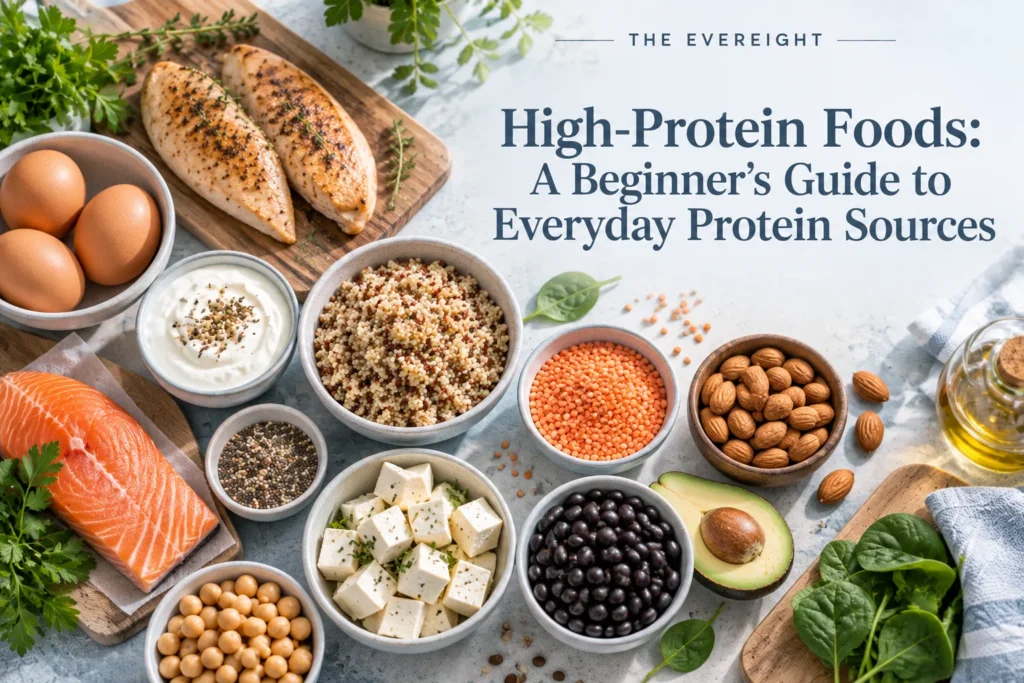
Protein has become one of the most heavily marketed nutrients in food.
It matters. Protein supplies amino acids used to build and maintain tissues, enzymes, hormones, and other body components. It can also help meals feel satisfying. But healthy eating does not require turning every snack into a protein challenge or buying a shelf of fortified products.
Most people benefit from understanding ordinary protein foods first.
Quick Answer
Everyday protein sources include eggs, poultry, fish, lean meat, dairy foods where suitable, tofu, tempeh, beans, lentils, edamame, soy foods, nuts, seeds, and some grains. The amount of protein in a food varies by serving and product. Spread useful protein sources across the day, pair them with produce and carbohydrate foods, and adjust intake to your individual needs.
How Much Protein Do You Need?
Protein requirements vary.
Factors include:
- Body size.
- Age.
- Activity.
- Pregnancy.
- Energy intake.
- Training goals.
- Health status.
The standard adult Recommended Dietary Allowance is commonly expressed relative to body weight, but that baseline is not a personalized performance target.
Older adults, athletes, and people dieting while trying to preserve lean mass may have different needs.
People with kidney disease or other relevant conditions should seek individualized medical nutrition advice before deliberately increasing protein.
Protein Quality
Protein foods contain different amounts and patterns of essential amino acids.
Animal proteins generally provide all essential amino acids in proportions readily used by the body.
Plant proteins vary, but a varied plant-based diet can provide adequate essential amino acids.
You do not need to combine specific plant proteins at every meal if your overall diet is varied and sufficient.
1. Eggs
Eggs provide high-quality protein along with vitamins, minerals, and fat.
They work at breakfast, lunch, dinner, or snacks.
Pair eggs with vegetables and a carbohydrate source for a more complete meal.
Preparation method changes added fat and sodium more than the egg’s basic protein content.
2. Chicken and Turkey
Poultry can provide substantial protein.
Cuts differ in fat content.
Skin, sauces, breading, and preparation method change the nutrition profile.
Use food-safety practices for raw poultry, including avoiding cross-contamination and cooking to safe temperatures according to current food-safety guidance.
3. Fish
Fish provides protein and, depending on the species, beneficial fats such as omega-3 fatty acids.
Choose a variety.
Mercury and other contaminant guidance can be particularly relevant for pregnancy, breastfeeding, and young children, so consult current local or national recommendations.
4. Lean Meat
Beef, pork, and other meats can contribute protein, iron, zinc, and vitamin B12.
Choose portions and cuts that fit your overall dietary pattern.
Processed meats are generally recommended less often in health-promoting dietary patterns.
5. Greek-Style or High-Protein Yogurt
Many strained yogurts contain more protein than standard yogurt, but amounts vary widely.
Check the label.
Added sugar also varies.
Choose a version that fits your preferences and dietary needs.
Dairy allergy and lactose intolerance are different conditions and require different considerations.
6. Cottage Cheese
Cottage cheese is protein-rich and convenient.
Sodium content can be significant in some products.
It can be paired with fruit, vegetables, whole-grain crackers, or used in recipes.
Choose suitable alternatives if dairy is not appropriate.
7. Milk
Dairy milk provides protein along with calcium and other nutrients.
Plant beverages vary dramatically in protein.
Soy beverages often contain more protein than almond, oat, rice, or coconut beverages, but formulation varies.
Check labels for protein and fortification rather than assuming all milk alternatives are nutritionally interchangeable.
8. Tofu
Tofu is a versatile soy protein.
Firm and extra-firm types work well for stir-fries, baking, grilling, and bowls.
Silken tofu can work in sauces and blended dishes.
Calcium content varies depending on how the tofu is made.
9. Tempeh
Tempeh is a fermented soy product with a firm texture.
It provides protein and can be sliced, crumbled, or marinated.
Flavor and sodium depend on preparation and packaged seasonings.
10. Edamame
Young soybeans provide protein, fiber, and carbohydrate.
Frozen shelled edamame is convenient for bowls, salads, soups, and snacks.
Choose sodium level based on the rest of your diet.
11. Lentils
Lentils provide protein, fiber, carbohydrate, iron, and other nutrients.
They cook relatively quickly compared with many dried beans.
Use them in soups, curries, salads, pasta sauces, or grain bowls.
Plant-source iron is absorbed differently from heme iron; vitamin C-rich foods can support absorption.
12. Beans
Black beans, kidney beans, chickpeas, cannellini beans, and many other varieties provide protein and fiber.
Canned beans are convenient.
Rinsing can reduce some surface sodium, though the effect varies.
Beans count as both a protein food and a carbohydrate-containing food.
13. Seitan
Seitan is made primarily from wheat gluten and can be high in protein.
It is not suitable for people with celiac disease or those who must avoid gluten.
Packaged products may be high in sodium.
14. Textured Vegetable Protein
TVP is typically made from soy and can be rehydrated for sauces, chili, tacos, and other dishes.
Protein content varies by product.
Check labels for ingredients and preparation instructions.
15. Nuts
Nuts provide protein, but they are better understood as a mixed source of unsaturated fat, protein, fiber, and micronutrients rather than a lean protein equivalent.
They are energy-dense.
A moderate portion can make meals or snacks more satisfying.
16. Seeds
Pumpkin, hemp, chia, sunflower, and other seeds contribute protein along with fats, fiber, and minerals.
Protein content differs.
Use them as additions to meals rather than expecting a spoonful to replace a full protein portion.
17. Nut and Seed Butters
Peanut butter, almond butter, tahini, and other spreads provide some protein and substantial fat.
They can be useful in snacks and meals.
Portion awareness may matter for weight-management goals because they are energy-dense.
Check for allergens.
18. Whole Grains
Oats, quinoa, whole wheat, and other grains contain protein, though generally less per serving than concentrated protein foods.
Their contribution adds up across the day.
Pairing grains with legumes or another protein source creates a satisfying meal.
19. Protein Pasta
Some pastas made from lentils, chickpeas, peas, or higher-protein wheat formulations provide more protein than traditional pasta.
Products vary in ingredients, fiber, texture, and protein.
They can be useful, but ordinary pasta can also fit a balanced meal.
20. Protein Powders
Protein powder can be convenient when food-based options are impractical.
Whey, casein, soy, pea, rice blends, and other products differ in allergens, amino-acid profile, sweeteners, testing, and ingredients.
Supplements are not required for most people.
Choose reputable products and consider third-party testing where relevant.
People with medical conditions, pregnancy, or medication concerns should discuss supplement use with a healthcare professional.
How to Add Protein at Breakfast
Try:
- Eggs.
- Yogurt.
- Milk or a higher-protein fortified alternative.
- Tofu scramble.
- Cottage cheese.
- Oats plus yogurt/milk and nuts or seeds.
You do not need protein powder if the meal already meets your needs.
How to Add Protein at Lunch
Try:
- Chicken or turkey.
- Tuna or other suitable fish.
- Beans or lentils.
- Tofu or tempeh.
- Eggs.
- Yogurt-based sides where suitable.
A sandwich, salad, soup, or bowl can all carry protein.
How to Add Protein at Dinner
Build the meal around a protein source, then add vegetables and carbohydrate.
Examples:
- Fish + potatoes + vegetables.
- Chicken + rice + vegetables.
- Lentil curry + rice + vegetables.
- Tofu stir-fry + noodles.
- Bean tacos + vegetables + toppings.
High-Protein Snacks
Useful options include:
- Yogurt + fruit.
- Egg + fruit.
- Edamame.
- Cottage cheese + fruit or vegetables.
- Nuts + fruit.
- Roasted chickpeas.
- A small protein-rich sandwich.
- Milk or suitable higher-protein alternative.
Article #45 contains a broader snack list.
Is More Protein Always Better?
No.
Once needs are met, continually increasing protein can displace fruits, vegetables, whole grains, and healthy fats.
Very high-protein eating may also be expensive and unnecessary.
Balance matters.
Protein and Weight Management
Protein can support satiety and help preserve lean tissue during energy restriction, particularly alongside resistance exercise.
But protein does not cancel calories.
A large high-protein meal can still exceed energy needs.
Use protein to improve meal structure, not as a license to ignore the rest of the diet.
Protein and Strength Training
Resistance training creates a stimulus for muscle adaptation.
Protein supplies amino acids needed for repair and growth.
Total daily intake and consistent training matter more than obsessing over a narrow post-workout window.
A balanced meal after training is often sufficient.
Animal vs Plant Protein
You do not have to choose one category exclusively.
Animal proteins can be nutrient-dense and convenient.
Plant proteins often provide fiber and can reduce reliance on saturated-fat-rich foods depending on choices.
A mixed pattern can use both.
A fully plant-based diet can also be nutritionally adequate with appropriate planning, including reliable vitamin B12.
Budget Protein
Affordable options may include:
- Eggs.
- Dried beans.
- Lentils.
- Canned beans.
- Canned fish.
- Larger tubs of yogurt.
- Tofu.
- Milk.
- Peanut butter.
- Frozen edamame.
Prices vary by location.
Compare cost per usable serving rather than marketing labels.
Reading a Protein-Food Label
Check:
- Serving size.
- Protein.
- Total calories if relevant to your goals.
- Saturated fat.
- Sodium.
- Added sugars.
- Ingredient list.
- Allergens.
A food does not become healthy solely because “20g protein” appears on the front.
Food Safety Matters
Store perishable protein foods at safe temperatures.
Avoid cross-contamination.
Cook meat, poultry, seafood, and eggs according to current food-safety guidance.
Refrigerate leftovers promptly.
Plant proteins also require safe handling and storage.
When to Ask for Individual Guidance
Seek a registered dietitian or healthcare professional if you have:
- Kidney disease.
- Significant liver disease.
- Metabolic disease requiring dietary management.
- Food allergies.
- Pregnancy.
- Pediatric nutrition needs.
- An eating disorder.
- Unintentional weight loss.
- Difficulty meeting protein needs because of illness or appetite.
EverEight Pro Tip
Instead of asking “How can I add more protein?” ask “Which meal currently has the least?” Improve that one meal first. Targeting the weakest point is simpler and often more useful than adding protein products to meals that were already adequate.