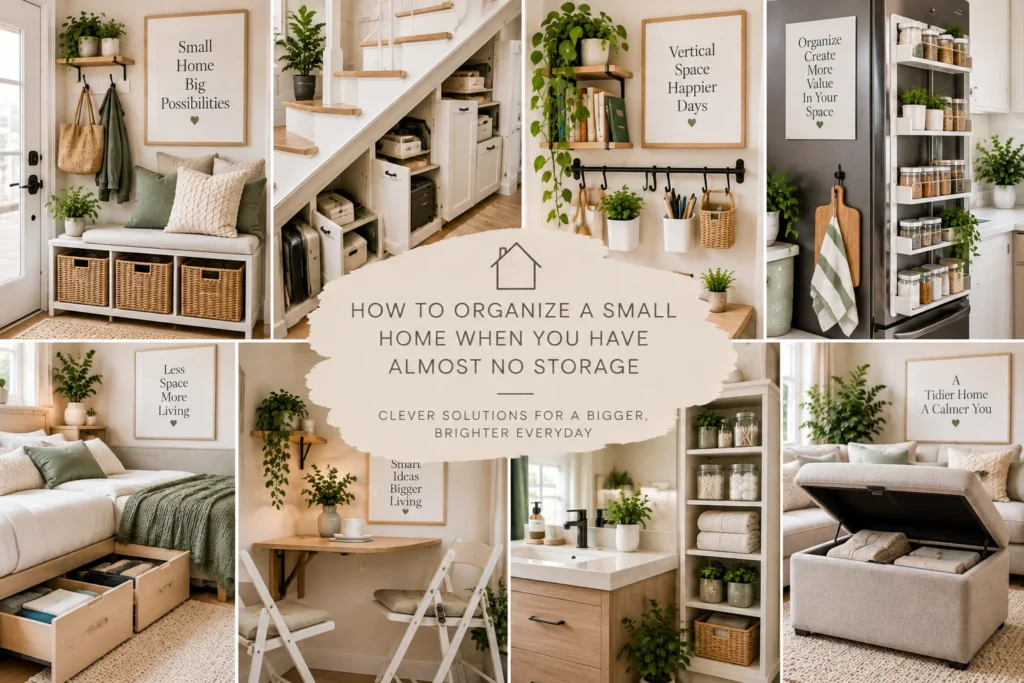
A small home can be comfortable and highly functional, but it has less tolerance for storage mistakes. A few oversized objects, an overfilled closet, or supplies stored far from where they are used can make the entire space feel crowded.
The answer is not to squeeze an organizer into every gap. Small-home organization works best when you reduce unnecessary inventory, use overlooked vertical and hidden spaces, and make each storage location work harder without becoming difficult to access.
This guide focuses on practical ways to organize a small house or apartment when closets, cabinets, and floor space are limited.
Quick Answer
In a small home, start by reducing what you store, then prioritize vertical space, doors, under-bed areas, wall storage, and furniture that serves more than one function. Keep frequently used items accessible, store occasional items in less convenient spaces, and avoid filling every open area with containers. The goal is not maximum storage; it is enough storage for the things you genuinely use.
Start With Capacity, Not Containers
Every home has a physical storage limit. Organizers can improve that capacity, but they cannot make it infinite.
Before purchasing storage, identify the categories consuming the most space. Clothing, bulk groceries, hobby supplies, seasonal décor, children’s items, paperwork, and kitchen equipment are common examples.
Ask whether the quantity fits your current home. If a category requires three separate storage locations and is still overflowing, the problem may be volume rather than organization.
Decluttering first gives you a realistic picture of the storage problem that remains.
Create a Storage Hierarchy
Not all storage is equally convenient. In a small home, use that difference deliberately.
Prime storage: eye-level shelves, easy drawers, reachable cabinets. Reserve these for daily and weekly items.
Secondary storage: higher shelves, under-bed areas, deeper cabinets. Use these for occasional items.
Archive or seasonal storage: the least convenient safe areas. Use these for things you intentionally keep but rarely need.
This prevents holiday decorations from occupying the shelf you need every morning.
Use Vertical Space Carefully
Walls are valuable in small homes because they provide storage without consuming much floor area.
Hooks can hold bags, light jackets, towels, tools, or kitchen accessories. Wall-mounted shelves can store books and display objects. Tall shelving units use height more efficiently than short, wide furniture.
Safety matters. Secure furniture and wall-mounted storage correctly for the wall type and expected load. Heavy items generally belong lower. Avoid placing storage where it interferes with doors, walkways, electrical equipment, ventilation, or emergency access.
Use the Back of Doors
Over-door organizers and mounted hooks can create useful storage in bedrooms, bathrooms, utility areas, and pantries.
Before installing anything, confirm that the door can still close freely and that the organizer will not damage the door, frame, or nearby wall.
Door storage is especially useful for lightweight, frequently used categories such as accessories, cleaning cloths, or small pantry items.
Make Under-Bed Storage Intentional
Under-bed space can hold seasonal clothes, spare bedding, shoes, or infrequently used items.
Use shallow containers that are easy to remove. Label them, especially if they are opaque. Avoid treating the area as a place to push random objects out of sight.
Check airflow and cleanliness periodically, and do not store materials in ways that conflict with product safety or environmental requirements.
Choose Furniture That Earns Its Floor Space
In a small home, furniture can provide both function and storage.
An ottoman may store blankets. A bed can include drawers. A bench can combine seating and shoe storage. A coffee table may have a shelf or hidden compartment.
Multipurpose does not automatically mean better, however. A storage bench that is too large for the entryway can make movement harder. Measure the room, including walking clearance and door swing, before buying.
Reduce “Just in Case” Inventory
Bulk buying can save money per unit but costs storage space. In a small home, that tradeoff matters.
Keep reasonable backstock for items you reliably use, but avoid turning living space into a warehouse. Track what you already have before shopping.
The same principle applies to duplicate kitchen tools, extra linens, beauty products, craft supplies, and household consumables.
Small Entryway Organization
A small entryway needs strict boundaries because clutter is visible immediately.
Use a narrow tray for keys, a few hooks, and only the shoes needed regularly. If possible, choose a narrow vertical shoe cabinet rather than a deep rack.
Create a temporary place for outgoing items – returns, library books, or things to take to work – but empty it regularly.
Small Living Room Organization
Avoid lining every wall with storage furniture. Too much furniture can reduce both usable floor area and visual breathing room.
Choose a few storage pieces that address real categories. Use baskets for blankets or toys, shelves for books, and closed storage for visually busy electronics or hobby supplies.
Keep surfaces relatively clear so the room can adapt to different activities.
Small Kitchen Organization
Small kitchens benefit from zones and vertical cabinet solutions.
Use shelf risers where tall cabinet space is wasted. Store pans and baking sheets vertically when a safe divider makes them easier to access. Add hooks or rails only where they do not create hazards or visual congestion.
Keep countertops for appliances you use frequently. An appliance used twice a year may deserve secondary storage rather than permanent countertop space.
Do not buy large pantry containers without measuring. Decanting can sometimes waste space because packaging is designed to stack efficiently.
Small Pantry or Food-Cabinet Organization
For examples of pantry organizers that solve specific storage problems, see our pantry organization product guide, which includes disclosed Amazon affiliate links.
Group food by purpose and keep categories narrow enough to see what you own.
Use the deepest or highest areas for backstock. Keep everyday breakfast, lunch, and snack items easier to reach.
Turntables can improve access to bottles and jars in certain cabinets. Small bins can keep packets together. Again, choose the tool after identifying the access problem.
Small Bedroom Organization
Closets should prioritize clothes you currently wear. Move seasonal items to secondary storage and review clothes that remain untouched year after year.
Use matching hanger types if they genuinely improve space efficiency, but do not buy new hangers simply for appearance. Hooks can handle bags, tomorrow’s outfit, or clothes to wear again.
Under-bed drawers or boxes can be valuable, but leave enough space to retrieve them easily. Storage you cannot access without moving furniture is unlikely to remain organized.
Small Bathroom Organization
Use shallow organizers so products do not disappear behind one another. Wall shelves, medicine cabinets, and door storage can help when appropriate.
Keep only routine products in prime storage. Backstock can move elsewhere if bathroom cabinets are limited.
Be cautious around plumbing and humidity. Leave access to shutoffs and pipes, and store medicines and products according to their labels.
Small Home Office Organization
A compact workspace needs fewer visible supplies.
Use vertical file holders, a small drawer unit, or wall storage for lightweight items. Digitize suitable papers when that reduces physical storage, but create a consistent file-naming and backup system so digital clutter does not replace paper clutter.
A rolling cart can work for supplies if the workspace has to disappear after work, but only if the cart itself has a defined parking place.
Use Containers as Boundaries
In small spaces, containers are valuable because they define limits.
A basket can determine how many blankets stay in the living room. A drawer can limit reusable bags. A shelf can define the space available for mugs.
When the container is full, treat that as a signal to review the category before purchasing another container.
Avoid the “Storage Everywhere” Trap
It is possible to over-organize a small home. Filling every wall, door, corner, and furniture surface with storage can make the space feel busier and make cleaning harder.
Leave some empty space. Empty space is not wasted storage; it allows doors to open, people to move, surfaces to function, and new items to enter without immediate overflow.
How to Make a Small Space Look Calmer
Visual calm is partly about reducing exposed categories.
Closed cabinets can hide visually complex items. Repeating a few container shapes can make open shelving feel more cohesive. Keeping floors and key surfaces relatively clear often has a greater impact than buying decorative organizers.
Color-coding is optional. Labels should serve retrieval, not decoration.
What to Buy – and What to Skip
Potentially useful small-space tools include sturdy hooks, shelf risers, shallow under-bed containers, drawer dividers, narrow shelving, and furniture with built-in storage.
Skip products that solve no identified problem. Be cautious with oversized sets of bins, extremely specific organizers, and furniture purchased without measuring.
Use painter’s tape on the floor to mark a prospective furniture footprint before buying. It gives you a better sense of how much walking space the item will consume.
A Weekend Small-Home Reset Plan
On the first pass, remove rubbish, donations, and objects that belong elsewhere. On the second, identify the three most crowded categories. On the third, improve access using storage you already own.
Only after that should you make a shopping list. Measure each target space and write down exactly what the organizer must accomplish.
This sequence keeps the project focused on function rather than shopping.
EverEight Pro Tip
In a small home, measure “retrieval space” as well as storage space. A bin may fit perfectly on a shelf but still be useless if you cannot pull it out without moving a chair, another bin, or half the closet.