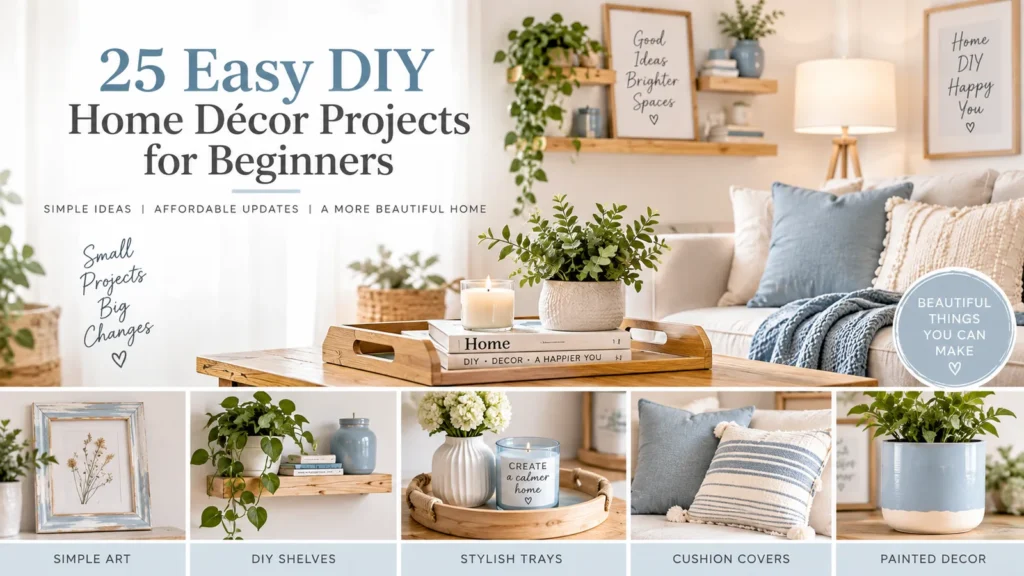
Beginner DIY décor should make a room feel more personal without requiring advanced woodworking, major renovations, or expensive equipment.
The easiest projects are usually small, decorative, and forgiving. They allow you to practice measuring, painting, simple assembly, fabric work, or basic fastening while keeping the consequences of a mistake manageable.
The 25 ideas below range from almost tool-free projects to simple builds. Adapt dimensions and materials to your home, and always follow product, tool, wall-fastening, and material safety instructions.
Project Overview
Skill Level: Beginner Estimated Cost: Varies; many projects can use materials already at home Estimated Time: About 30 minutes to a weekend, depending on drying time and complexity Best Approach: Choose one project that teaches one new skill Safety: Avoid electrical, structural, gas, major plumbing, or hazardous-material work; use appropriate PPE and secure wall-mounted items correctly
Basic Materials You May Use
You will not need all of these:
- Measuring tape or ruler
- Pencil
- Straightedge or square
- Painter’s tape
- Suitable paint and applicators
- Sandpaper where appropriate
- Fabric or paper
- Frames
- Wood or premade craft boards
- Appropriate adhesive
- Hooks or wall fasteners suited to the wall and load
- Basic hand tools
- Safety equipment appropriate to the task
Check compatibility before using paint, adhesive, fasteners, or finishes.
1. Framed Fabric Art
Stretch an interesting piece of fabric behind a frame backing and display it as art.
This is useful for fabric remnants, scarves that are suitable for repurposing, or patterned textiles.
Iron or smooth the fabric according to its care instructions before framing. Avoid cutting a valuable textile until you are certain you want it altered.
Beginner skill: Composition and simple measuring.
2. Coordinated Picture-Frame Gallery
Use frames you already own or collect inexpensive frames, then unify them with a consistent arrangement.
You do not need every frame to match.
Lay the composition on the floor first. Trace frame outlines on paper and tape the templates to the wall to test spacing.
Use wall fasteners appropriate for the wall type and frame weight.
Beginner skill: Layout and wall planning.
3. Painted Terracotta-Style Pots
Decorate suitable plant pots with paint intended for the material and conditions.
Keep drainage holes functional and consider whether the pot will be indoors or exposed to moisture.
Paint only the surfaces recommended by the product manufacturer.
Beginner skill: Surface preparation and painting.
4. Simple Decorative Tray
Refresh an existing tray or unfinished craft tray with a suitable finish, liner, or decorative paper.
Use it to contain coffee-table items, keys, or bedside essentials.
If the tray will contact food directly, use materials and finishes appropriate for that intended use.
Beginner skill: Finishing and functional styling.
5. Removable Wallpaper Accent Inside a Bookcase
Instead of covering an entire wall, add removable wallpaper or another appropriate removable liner to the back panel of a bookcase.
Measure each section separately; shelves and panels are not always perfectly square.
Follow the adhesive product’s surface instructions and rental requirements.
Beginner skill: Accurate measuring and pattern alignment.
6. Painted Wooden Bead Garland
String suitable craft beads on cord and finish them in colors that fit your décor.
This is a decorative object, not a toy. Keep small beads and cords away from young children and pets.
Beginner skill: Simple finishing.
7. No-Sew Cushion Cover
Use a proven no-sew construction method with fabric and fastening products suitable for textiles.
Choose a removable approach if you need to wash the cover.
Keep adhesives away from heat and follow curing instructions.
Beginner skill: Fabric measuring.
8. Decorative Book Covers
Create removable paper or fabric jackets for books used in a display.
Do not glue directly to valuable books.
This is an easy way to practice measuring and folding without changing the underlying item.
Beginner skill: Paper craft and precision.
9. Painted Picture-Frame Mats
A frame mat can be refreshed with a suitable paint or replaced with colored paper or board.
Remove the artwork first and keep paint away from photographs or valuable prints.
Beginner skill: Controlled painting.
10. Simple Wall Banner
Create a lightweight textile or paper banner from a dowel, cord, and decorative material.
Keep the object light and use a hanging method appropriate for the wall.
Do not hang cords where they create a strangulation or entanglement risk for children or pets.
Beginner skill: Simple assembly.
11. Pressed Botanical-Style Art
Use properly dried leaves or flowers, or printed botanical material, between suitable frame layers.
Real plant material must be fully dry to reduce moisture problems.
Avoid collecting protected plants or material from places where removal is prohibited.
Beginner skill: Arrangement.
12. Painted Storage Boxes
Turn plain boxes into décor with a compatible paint, paper, or label system.
This works best for lightweight storage on open shelves.
Do not paint containers used for direct food storage unless the product is specifically suitable for that use.
Beginner skill: Surface finishing.
13. Decorative Mirror Border
Add a lightweight removable or appropriately attached decorative border around a simple mirror.
Do not modify the mirror’s mounting system unless you understand the load and wall requirements.
Keep added materials clear of edges where they could interfere with safe handling.
Beginner skill: Symmetry and adhesive use.
14. Photo Ledge Styling – Using an Existing Ledge
If you already have a securely installed picture ledge, create a layered display of frames, small art, and lightweight objects.
Keep heavier items stable and avoid overloading the ledge.
This project focuses on composition rather than construction.
Beginner skill: Visual balance.
15. Painted Vase or Bottle Cover
Refresh a suitable decorative container with paint intended for the material.
If repurposing a bottle, clean it thoroughly and remove sharp labels or edges.
Do not use a decorative coating where it will contact food or drink unless specifically rated for that purpose.
Beginner skill: Paint application.
16. Fabric-Covered Pinboard
Cover a cork or appropriate pinboard with fabric and secure it on the back using a suitable method.
Keep staples or sharp fasteners fully contained.
Mount the finished board according to its weight and wall type.
Beginner skill: Tension and fastening.
17. Simple Tabletop Centerpiece Box
Use a premade unfinished wooden box or shallow container and apply a suitable finish.
Fill it with nonflammable decorative items appropriate for the location.
If using candles nearby, maintain safe clearance and never create a combustible enclosure around an open flame.
Beginner skill: Finishing.
18. Painted Doorstop
Decorate a suitable premade wooden doorstop.
Do not alter fire doors or use a doorstop where keeping a door open conflicts with fire-safety requirements.
Beginner skill: Small-scale painting.
19. Decorative Hook Board From a Premade Board
Attach suitable hooks to a premade board according to the hook and board instructions.
If mounting the board to a wall, choose fasteners based on the wall and expected load.
This can become an entryway key holder or lightweight accessory rack.
Beginner skill: Measuring repeated spacing and simple drilling.
20. Customized Lampshade Exterior
Decorate the exterior of a lampshade only with materials and methods that are specifically appropriate for lampshades and heat exposure.
Do not block ventilation, alter electrical components, or place flammable material near a hot bulb.
LED bulbs generally produce less heat than older technologies, but fixture and shade manufacturer requirements still apply.
Beginner skill: Careful decorative application.
21. Painted Furniture Accent – One Small Area
Instead of repainting an entire dresser, update a drawer front, small stool, or another suitable furniture element.
Clean, prepare, prime, paint, and cure according to the finish manufacturer’s instructions.
Avoid painting antique or valuable furniture before researching its value.
Beginner skill: Furniture preparation.
22. Simple Decorative Shelf Display Box
Use a premade wooden shadow box or craft crate as a freestanding display.
Finish it and place it on a stable surface.
If you decide to wall-mount it, the project changes: you must evaluate the box, wall, fasteners, and load.
Beginner skill: Finishing and styling.
23. Seasonal Art Swap Folder
Create several lightweight prints or handmade pieces sized for frames you already own.
Store unused art flat in a labeled folder and rotate it seasonally.
This is décor with almost no permanent material commitment.
Beginner skill: Planning a repeatable system.
24. Painted or Wrapped Plant Stand
Refresh a simple plant stand using a material-compatible finish or removable wrap.
Check that the stand remains stable and can support the plant and wet pot.
Protect surrounding surfaces from water.
Beginner skill: Finishing around functional requirements.
25. Simple Wooden Sign
Use a premade craft board, sand it if required, and add painted lettering, a stencil, or another suitable design.
If cutting the board yourself, follow safe cutting procedures and use the appropriate tool.
For wall display, choose hardware suited to the sign’s weight and wall construction.
Beginner skill: Measuring, finishing, and optional basic tool use.
How to Choose the Best First Décor Project
Pick the project with the fewest unfamiliar steps.
If you have never painted, choose a small painted object rather than furniture. If you want to practice wall layout, arrange frames before building a shelf.
The goal is to finish with one new skill and enough confidence to try the next level.
How to Keep DIY Décor From Looking Accidental
DIY does not need to imitate factory perfection, but a few details make a difference.
Measure repeated spacing. Limit the color palette. Allow finishes to dry and cure properly. Remove drips or rough edges using methods appropriate for the material. Test layouts before attaching anything permanently.
Most importantly, stop adding decoration when the piece already feels complete.
Budget Tips
Use frames, trays, boxes, and containers you already own.
Buy small quantities for small projects. Large “value” sets are not economical if most materials remain unused.
Compare the cost of the DIY version with a finished item. Make the project because you want the customization or learning experience, not because DIY is assumed to be cheaper.
Safety Reminders for Beginner Décor
Wall-mounted décor can fall. Match fasteners to the wall construction, object weight, and expected load.
Keep cords, small parts, sharp hardware, paints, adhesives, and tools away from children and pets.
Follow ventilation and PPE instructions for finishes.
Do not alter electrical fixtures, fire-safety features, structural components, or building systems as a décor shortcut.
Common Beginner Mistakes
Skipping a test piece: Colors and adhesives behave differently on real materials.
Choosing an oversized project: A tiny décor project teaches the same technique with less risk.
Hanging before the finish cures: Surfaces can stick or mark.
Using decorative adhesive for structural loads: Adhesive strength and surface compatibility matter.
Buying a complete craft room: Purchase for the project you are doing now.
EverEight Pro Tip
Choose a “repeatable dimension” before you start – for example, the same 2-inch border or the same spacing between frames. Repeating one measurement makes a beginner project look deliberate and reduces decisions.